
Best Vintage Digital Cameras for the 2000s Look: Canon, Sony, Nikon & Fujifilm
VINTAGE DIGITAL CAMERA GUIDE
Discover the best vintage digital cameras for the nostalgic 2000s digicam look and find a pre-owned camera that suits your style.
IN THIS GUIDE
- What makes a vintage digital camera look different?
- Vintage digital camera families worth exploring
- Which vintage digital camera should a beginner choose?
- How to get the 2000s digital camera aesthetic
- What to check before buying a vintage digicam
- Are vintage digital cameras expensive?
- Frequently asked questions
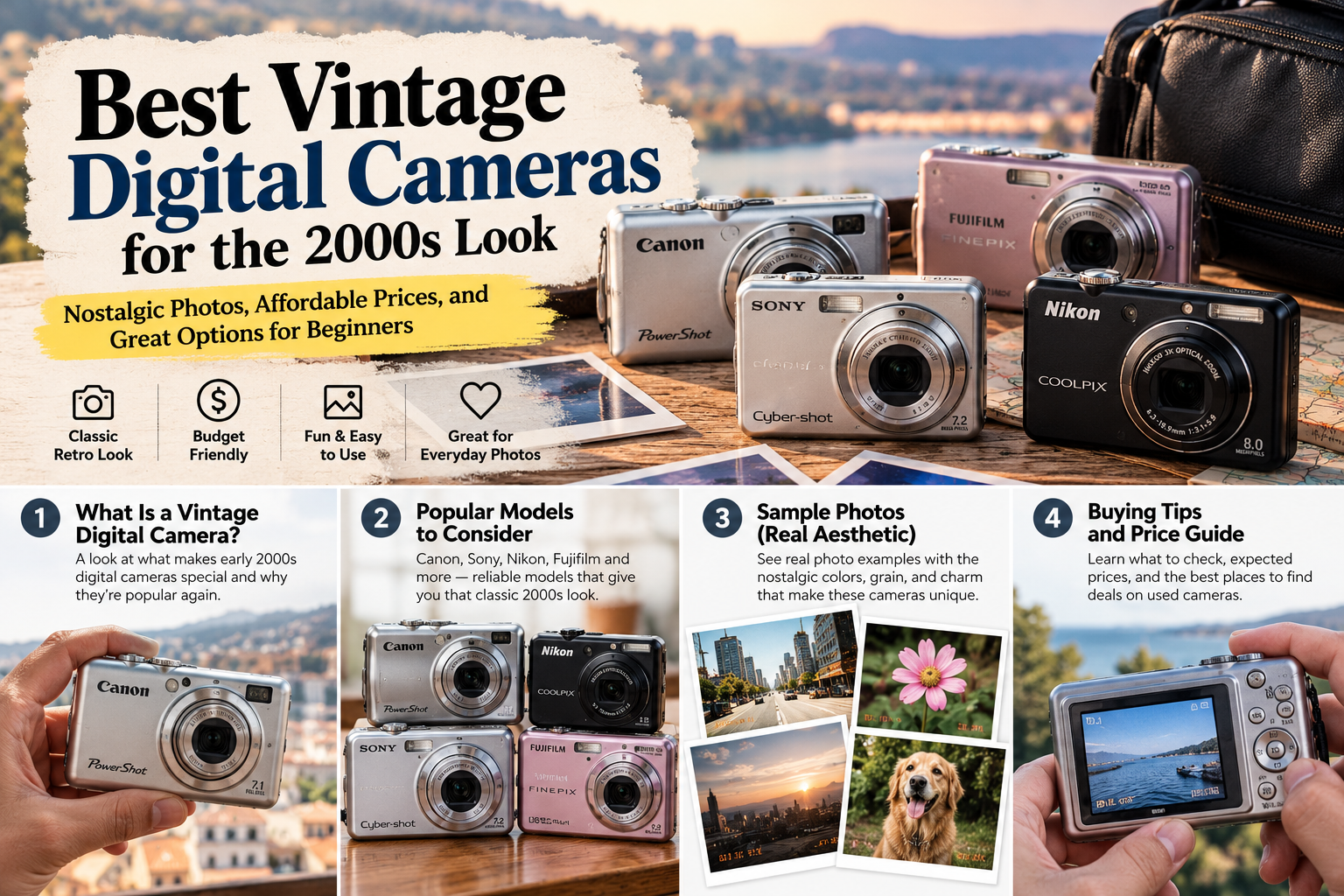
Looking for the best vintage digital cameras to capture the nostalgic 2000s look? Early compact digital cameras can produce a distinctive combination of direct flash, modest resolution, punchy colors and visible noise that feels different from today’s highly processed smartphone images. You don’t need the rarest or most expensive model to experiment with this style.
In this guide, we’ll explore vintage digital camera families from Canon, Sony, Nikon and Fujifilm, explain how to choose one, and share practical tips for shopping used. The best camera is the one that suits your budget, preferred look and tolerance for older technology.
What makes a vintage digital camera look different?
Many compact cameras from the early and mid-2000s use small CCD image sensors, built-in flash and older image-processing systems. Together with their lenses and settings, these can create the familiar ‘digicam’ look: bright flash-lit portraits, strong contrast, visible grain in low light and less aggressive computational processing than a modern phone.
But the look is not guaranteed by a CCD sensor alone. Lighting, white balance, exposure, flash use and even how you edit or transfer the image can change the result. A later CMOS compact camera can also make appealing nostalgic images.
Vintage digital camera families worth exploring
1. Canon PowerShot: versatile everyday point-and-shoot cameras
Canon’s older PowerShot A-series and Digital ELPH/IXUS families are worth considering if you want straightforward controls and classic compact-camera styling. Some models offer optical viewfinders, AA batteries or useful manual options, depending on the specific version.
Best for: Everyday snapshots, casual travel and buyers who want to explore a broad range of used models. Confirm the exact model’s battery and memory-card requirements; they vary substantially across the range.
2. Sony Cyber-shot: compact designs and easy snapshots
Sony Cyber-shot models from the 2000s are recognizable for their slim bodies and pocketable designs. Certain older W-series and DSC models appeal to people who like direct-flash portraits and a simple shooting experience.
Best for: Parties, portraits and pocket-friendly photography. Some Sony models require Memory Stick media or proprietary batteries, so accessories deserve special attention.
3. Nikon COOLPIX: a wide variety of beginner-friendly options
Older Nikon COOLPIX cameras span simple compact models and more unusual designs. Many provide easy automatic shooting, built-in flash and optical zoom, making them approachable for someone who wants to take pictures without learning interchangeable-lens photography.
Best for: Casual photographers who value ease of use. Check lens operation, battery-door condition and the exact supported memory card.
4. Fujifilm FinePix: color and retro-camera appeal
Fujifilm FinePix includes a diverse selection of older compact digital cameras. Their rendering differs by model and generation, so look at real sample photographs from the exact camera you are considering rather than assuming all FinePix cameras share one color profile.
Best for: Experimenting with different color rendering and vintage designs. Some models use xD-Picture Cards, which can be less convenient to source than modern SD cards.
Which vintage digital camera should a beginner choose?
- For simple everyday photos: Start with a common Canon PowerShot or Nikon COOLPIX that has documented working condition.
- For a pocket-sized party camera: Compare Sony Cyber-shot and Canon ELPH models with working flash.
- For experimenting with different colors: Look at real sample images from specific Fujifilm FinePix models.
- For easier accessory replacement: Favor models using readily available AA batteries or common compatible memory cards, after checking the manual.
A tested, complete camera with an ordinary model name can be a better purchase than a fashionable camera missing its charger or memory card. Compare the total cost of the camera and everything needed to use it.
How to get the 2000s digital camera aesthetic
Use the built-in flash intentionally
Direct flash is part of the look many people associate with early digital snapshots. Try it for indoor portraits or evening scenes, while respecting other people’s comfort and any restrictions on flash photography.
Experiment with daylight and white balance
Photographing outdoors in bright daylight can produce vivid colors and sharper results. Experiment with the camera’s available white-balance settings and compare images on a larger screen.
Keep expectations realistic in low light
Small-sensor cameras often struggle with dim scenes, resulting in noise, blur or slow shutter speeds. That can be part of the aesthetic, but it can also mean missed moments. Brace the camera or use flash when appropriate.
Review real sample images
Look for sample photos from the exact model and, ideally, at different lighting conditions. Online promotional images and AI-generated illustrations are not reliable evidence of a camera’s actual output.
What to check before buying a vintage digicam
- Power and shutter: Does it turn on, take photos and display them in playback?
- Lens and zoom: Does the lens extend and retract without errors, and is the glass free from serious damage?
- Flash and screen: Have they been tested? Are there visible screen defects?
- Battery and charger: Are they included, functional and replaceable?
- Memory card: Does the camera require SD, Memory Stick, xD or another older format?
- Condition: Are cosmetic wear and functional defects disclosed separately?
For a more detailed inspection checklist, read our guide to buying a used digital camera.
Are vintage digital cameras expensive?
Prices vary widely by model, cosmetic condition, working status, included accessories and demand. Social-media attention can make certain compact cameras unusually expensive, but that doesn’t mean they take better photographs than less fashionable alternatives. Compare recent sold listings rather than only asking prices, and include shipping, batteries, chargers and memory cards in your budget.
Frequently asked questions
Are CCD cameras better for the 2000s look?
CCD cameras are often associated with the era, but sensor type alone doesn’t determine image style. Flash, exposure, lens, processing and lighting matter too.
Can I transfer pictures from an old digital camera to my phone?
Often yes, but the process depends on the camera. A compatible card reader, USB cable or computer may be needed. Verify the exact card format and connection method before buying.
Should I buy a camera labeled untested?
Only if you’re comfortable with the possibility that it may not function. A tested camera with clearly disclosed limitations is generally a more predictable choice for a beginner.
Find your next vintage digital camera
At BeyondContent, we focus on pre-owned cameras and clear condition descriptions. When browsing our used camera store, check each product’s actual test results, condition grade and included accessories. Representative illustrations do not show the exact item you will receive.
Find a camera you’ll love
Browse BeyondContent’s pre-owned cameras with detailed condition notes and clearly listed accessories.
Add comment