
Used Instax Mini 11 vs Mini 12: Price, Film Costs & Buying Tips
A used instant camera can be an affordable way to make physical photos at parties, on trips, or as gifts. But the price of the camera is only half the decision: every shot uses a sheet of film, and a bargain body is disappointing if its film-ejection mechanism or flash does not work.
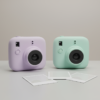
Two popular secondhand options are the Fujifilm instax mini 11 and instax mini 12. Both use the same instax mini film and aim to make shooting straightforward. Here is how to choose between them, what a realistic film budget looks like, and which used-camera checks are worth prioritizing.
Instax Mini 11 vs Mini 12: what’s actually different?
| Feature | instax mini 11 | instax mini 12 |
|---|---|---|
| Film | Fujifilm instax mini | Fujifilm instax mini |
| Picture area | 62 × 46mm | 62 × 46mm |
| Exposure | Automatic | Automatic |
| Close-up shooting | Selfie mode, about 0.3–0.5m | Close-up mode, about 0.3–0.5m |
| Viewfinder correction in close-up | No dedicated parallax-correction feature listed | Parallax correction in Close-Up Mode |
| Power | Two AA alkaline batteries | Two AA alkaline batteries |
These details come from Fujifilm’s mini 11 manual and the official mini 12 specifications. Neither camera stores a digital copy of each exposure: the instant print is the product.
Why the mini 12 is easier for close-up framing
When you photograph something close to the lens, the viewfinder sees the scene from a slightly different position. This is called parallax. The mini 12 adds viewfinder correction for its Close-Up Mode, helping you frame selfies and nearby subjects more accurately. Fujifilm describes its close-up range as 30–50cm. That is a useful improvement, but it does not make every close-up perfectly composed.
Why the mini 11 may still be enough
The mini 11 already has automatic exposure, a built-in flash, a selfie mirror and close-up shooting. If you mainly take casual portraits at normal distances and find a genuinely functional mini 11 for meaningfully less money, the older model can make sense. Its lower upfront cost can leave more room for film.
How much should a used Instax Mini 11 or 12 cost in 2026?
Pricing depends on condition, color, accessories, included film and seller policies. A third-party October 2026 guide from FlipperTools for the mini 11 displayed an estimated used-value range of roughly $26–$35; its mini 12 guide showed roughly $40–$53.
Important: those are estimates derived from active eBay asking prices with a discount applied, not verified completed-sale averages. The mini 11 page used an October 6 sample and the mini 12 page an October 19 sample; both can become stale quickly. Before paying, check recent completed sales for the same model and condition on eBay, then compare the total at checkout on any marketplace, including shipping and applicable fees.
Fujifilm currently lists the mini 11 as discontinued. That does not mean every used unit is rare or that it will increase in value.
Don’t forget the ongoing cost of instant film
Both cameras use the same instax mini film. As one transparent retail example, B&H listed a 20-exposure twin pack at $18.17 when checked on October 26, 2026. That works out to approximately $0.91 per exposure before sales tax or shipping. Prices, promotions and stock can change.
| Photos you take | Film cost at $18.17 per 20 |
|---|---|
| 20 exposures | $18.17 |
| 40 exposures | $36.34 |
| 100 exposures | $90.85 |
That is why a $10–$20 difference in camera price may matter less over a year than how often you shoot. Film that has been stored poorly or is past its expiration date may produce inconsistent results; check packaging and dates when purchasing film separately.
What to check before buying a used instant camera
1. Ask whether it was tested with fresh film
A camera that powers on is not necessarily a camera that produces a correctly exposed print. The strongest evidence is a recent, clearly identified sample photo from the unit, along with confirmation that film ejects normally. Testing with fresh film can consume exposures, so some sellers disclose only a partial check. That is acceptable as long as the limitation is clear.
2. Inspect the film door and ejection slot
The film door should latch securely, and the ejection slot should be free of obvious damage. Never open the back of a loaded instant camera casually: light can ruin the remaining film. Ask the seller to explain any damage or obstruction rather than forcing the mechanism.
3. Check flash, lens and close-up controls
Confirm that the flash charges and fires, the lens extends or switches modes as intended, and the shutter responds. Look for cracks around the lens, broken mirrors, and loose or jammed controls. A cosmetic scuff is not the same thing as a functional defect.
4. Inspect the AA battery compartment
Both mini 11 and mini 12 use two AA alkaline batteries. Ask for a clear picture of the contacts and cover. Corrosion, a missing cover or unreliable power can turn a cheap camera into a frustrating purchase.
5. Count the real total, not just the listing price
Does the camera come with film, a strap, batteries or a case? Is the included film fresh and compatible? Check shipping, return terms and whether the unit is explicitly sold for parts or repair. Our general used-camera buying guide explains how to read condition disclosures, while our inspection checklist outlines the importance of unit-specific results.
What about the Lomo’Instant Automat?
If you want more experimentation than the basic Instax models provide, the Lomo’Instant Automat is another instant-film option. According to Lomography, it uses instax mini film and offers zone focusing, exposure compensation and creative shooting features. It uses a different battery setup from the AA-powered Fujifilm cameras, so confirm the exact version’s requirements before ordering.
BeyondContent has a Lomo’Instant Automat Adventure Challenge edition listing. Its listing explicitly states that power, shutter, flash and controls were checked, but fresh-film exposure, film ejection and finished-image quality were not verified. Read that distinction before considering it; an unverified film test is not equivalent to a demonstrated working print.
Which used Instax should you buy?
Choose the mini 11 when the unit is in good functional condition and you want the lowest reasonable upfront cost. Choose the mini 12 when close-up framing matters and its additional cost fits your budget. Consider the Lomo’Instant Automat if creative control appeals to you, but pay especially close attention to the exact unit’s testing disclosures.
Whichever camera you choose, budget for film first, look for honest evidence of operation, and compare the full delivered cost rather than a headline price.
Research checked October 26, 2026. Third-party resale estimates and retail film prices are snapshots, not guaranteed transaction prices or inventory commitments.
Add comment